
Google Ads management, and the honest number.
Performance Max, Search, conversion tracking. Two Performance Max campaigns I ran for Da Life Outdoors: Google Ads reported 7.2x on $15.8K of spend over 11 months, and GA4 last-click credited 5.4x on the same window. I publish both, because knowing which number is real is what tells you whether to keep spending.
Most accounts I review have the same problems: weak conversion tracking, learning-phase-stuck campaigns, generic creative, and budget caps that strangle the campaigns actually working. The work isn’t running more ads; it’s running cleaner ones.
- ›Performance Max for service businesses + small-catalog online stores — the campaign type that won Da Life
- ›Conversion tracking + value setup — transaction-fired conversions with dynamic value
- ›Audience targeting — first-party data, custom segments, customer match for lookalike-style expansion
- ›Asset group strategy — one campaign per service/category, not one campaign with everything
- ›Quarterly creative refresh — new asset variations before fatigue erodes click-through rate
- ›Landing page review + ad-to-page alignment — the conversion leak nobody talks about
Conversion tracking comes before campaigns
Google Ads can only optimise toward what it can see. If the conversion it counts is a form fill or a page view, it gets very good at buying form fills and page views. The first thing I check on any account is what the primary conversion actually is, whether it carries the real sale value, and whether that value matches what the business actually took in.
On Da Life the answer was a GA4 purchase event, fired when a booking completes, imported into Google Ads with the real booking value. GA4’s total revenue for the year matched the booking platform’s own records to within half a percent, which is the check that tells you the tracking is complete before you trust any return figure built on it.
Why I publish two numbers
Google Ads reported 7.2x. GA4 last-click credited 5.4x on the same window. Both are real, they just answer different questions. The platform uses data-driven attribution and a long click window, so it takes credit for bookings that other channels also touched, including people who were already searching the company’s own name. At least 23% of the value Ads claimed came from branded search. Knowing that gap is what tells you whether the next dollar of budget will earn what the last one appeared to.
Related: Google Ads for tour operators · Why Google Ads reports more than GA4 · Tracking FareHarbor bookings
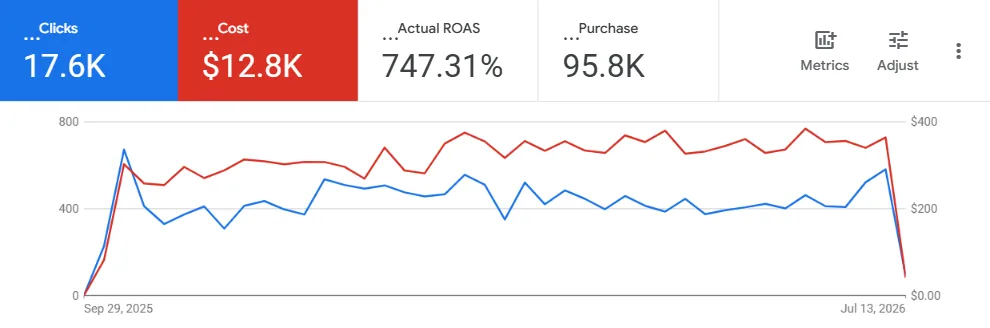
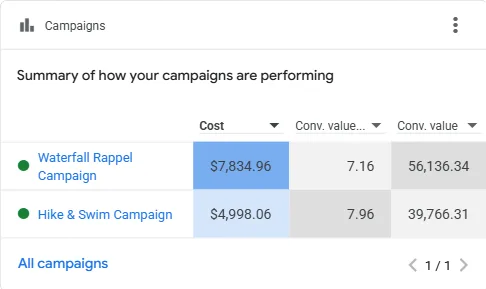
The full Da Life Outdoors playbook is in the case study and deep-dive article.
What does Google Ads management include?
Campaign structure, conversion tracking, audience signals, creative and landing-page alignment, budget pacing and monthly reporting. Tracking gets fixed first, because every other decision is made on the numbers it produces.
Do you run Performance Max for service businesses?
Yes. Performance Max works without a product feed when the conversion it optimises toward is a real booking with a real value. For Da Life I ran one campaign per tour rather than one campaign with several asset groups, so each tour kept its own budget.
Why is my Google Ads number higher than Google Analytics?
Usually attribution. Google Ads credits conversions with its own model and a long click window, while GA4 reports often credit the last click. Branded searches inflate the gap further. I reconcile the two against your booking or order system so you know which number to plan with.
Do you work with businesses outside Hawaii?
Yes. I work remotely with businesses across the US. Kauaʻi is where I am, not a limit on who I work with.
Review only: The Roadmap ($497) includes a full review of this and the rest of your stack.
Build or launch: included in The Setup ($3,500, 30-day sprint).
Ongoing: continues monthly in The Retainer ($1,500/mo). Capped at three brands.